
Real Lights — Level 1: Pre-production
I have a creative idea, but not yet a concept that can be produced
A brief arrives, and between the idea and the show stand the budget, safety, the venue and who does what on site. Until those are worked out, the idea can't be priced, approved or built. What's missing is the management side: taking the idea to a concept that accounts for all of it.
- Structure:
- 8 modules, 22 lessons
- Video:
- 14 h in total
- Pace:
- All lessons open
- Access:
- 2 years
- Language:
- English
- Level:
- Intermediate
About the course
Aboutthecourse
- 01
the starting point
This course develops the preproduction capability to translate creative live-event briefs into feasible lighting and multimedia productions.
- 02
what you build
Learners integrate venue, safety, technical, commercial, and operational constraints to design spatial and control systems, visualise design intent, and produce the documentation and coordinated workflows required for reliable delivery.
Courseaims
- 01
To provide an understanding of how a live-event lighting and multimedia production moves from client brief to delivery: lighting and control technology, venue and safety limits, roles, budgets and supplier agreements.
- 02
To develop practical skills in visualising lighting and screen concepts in Capture and Depence and in producing the plots, equipment reports, renders and patch lists that a production team works from.
- Lighting Fundamentals ·
- Show Workflow, Roles & Budgeting ·
- Venues, Constructions & H&S ·
- Concept Development ·
- Capture Intro ·
- Capture Advanced & Tech Docs ·
- Depence: Basics & Models ·
- Depence: Lighting ·
Who this course is for
For you if
- Lighting designers — You're past the basics, and this course works on the preproduction stage, where your creative idea has to fit the venue, safety rules and budget before the show can be built.
- Show operators — You know a show from the running side, and this course takes you back into preproduction, where the control systems and workflows you rely on during the show get decided.
- Event designers — Your work starts with a creative brief, and this course is about checking it early against venue, safety, technical, commercial and operational limits so it becomes a production that can be delivered.
- Media engineers — You already work at an intermediate level, and this course puts your technical side inside the preproduction of a live event, next to the venue, safety and commercial decisions that shape it.
Not for you if
- –you do not meet the requirements in “Before you start”
- –you have neither taken TouchDesigner 101: Extreme I and TouchDesigner 102: Extreme II nor gained equivalent experience
- –you already know the Intermediate material → take TouchDesigner 204: Real Lights — Level 2: Production
Before you start
Completion of TouchDesigner 101: Extreme I and TouchDesigner 102: Extreme II, or an equivalent working knowledge of 3D scene navigation and object manipulation, 3D modelling with primitives, lighting and shadow concepts, material and texture workflows, and camera depth and clipping concepts.
Prerequisites:TouchDesigner 101: Extreme I↗, TouchDesigner 102: Extreme II↗
Not taken them yet? Both are in theTouchDesigner Extreme Bundle↗.
- 01Develop a live-event concept from a client brief, venue references and budget, compare alternative versions and check that it can be built on the venue
- 02Check a lighting and stage design against venue safety limits: structural and wind loads, haze and fire alarms, sound, heat, lasers and strobes, and decide what needs qualified approval
- 03Prepare a rental-based equipment estimate and agree phased payment terms with a client
- 04Plan power, signal and control for lighting fixtures and LED pixel bars: cable and repeater routes, DMX and Art-Net, front-of-house control with backup playback, and compatible fixture substitutions
- 05Visualise a lighting rig and media screens in Capture, from venue model import to fixture and haze tests, and produce plots, equipment reports and concept renders for a production team
- 06Build a stage in Depence from a floor plan and reference images: LED and projection surfaces, fixtures patched across DMX universes with a patch-list export, and a custom LED tube driven by DMX
Programme
01Lighting Fundamentals
3 videos · 1 h 32 min
Lesson 1. History of theatrical lighting and control systems · 26 min
In this lesson we trace theatrical lighting from daylight and candles to gas, electric lamps and moving fixtures, and see how each step changed what a stage could show. We follow dimming and control from mechanical wheels to consoles at front of house. The lesson opens with an introduction to the course.
Lesson 2. A tour of concert lighting fixtures and LED bars · 50 min
In this lesson we learn to tell the main entertainment lighting fixtures apart by what their light does: spots, washes, follow spots, moving LED bars, pixel bars, matrices, strobes, lasers and projection in haze. We see how pixel bars are chained, powered and fed signal. Questions cover infrared triggering, LED versus lamps and audience control.
Lesson 3. Live Show Control Protocols · 17 min
In this lesson we map the protocols that control a live show and see why lighting, laser, video and audio each need their own system. We compare older analogue lighting control with its digital successor, learn how fixtures are addressed remotely, and weigh separate systems against one unified environment, including equipment that can only send signals.
02Show Workflow, Roles & Budgeting
3 videos · 1 h 20 min
Lesson 4. Live Show Pre-Production · 31 min
In this lesson we follow one stadium show through pre-production, from a client's first request to build-ready documentation, so you see who does what at each stage. We cover the brief and concept iterations, venue limits, approvals, preliminary drawings checked with suppliers, and final light plots. Questions on outdoor lasers and documentation software are answered.
Lesson 5. Fixture substitutions and GDTF; Art-Net merging in MA2 · 29 min
In this lesson we see how a show's lighting, video and control systems are planned so the show runs reliably on the day. We cover fixture substitutions agreed with the rental company, main and backup media servers and consoles, merging pixel-mapped content with console effects, and the roles at show execution. Questions on fixture standards and outsourced rendering are answered.
Lesson 6. Estimating event equipment budgets; Contracts for phased design payments · 20 min
In this lesson we learn to estimate an AV production equipment budget before a project is approved. We compare rental arrangements, read rental price lists, add the supporting equipment, logistics and labour that the list leaves out, and see how a client's budget limits the scope. Questions on agreements for phased payments and changes of scope are answered.
03Venues, Constructions & H&S
2 videos · 1 h 15 min
Lesson 7. Adapting lighting designs to venue constraints and rigging · 28 min
In this lesson we see how venue constraints shape a lighting design: what theatres, arenas, stadiums, tents, warehouses and historic buildings let you hang or build. We cover wind and weight risk, and the drawings, tests and approval a custom structure over an audience needs. Audience questions on custom builds and liability are answered.
Lesson 8. Planning safe venue builds and lighting effects · 47 min
In this lesson we learn which safety constraints each venue puts on a lighting design: weight and wind load, moving stage elements, haze and fire alarms, low fog, sound level, lamp heat, lasers and strobes. We also see who must approve a design decision before it reaches the venue.
04Concept Development
2 videos · 1 h 1 min
Lesson 9. Developing buildable LED installation concepts from venue briefs · 34 min
In this lesson we learn how an AV installation concept grows from a client brief and venue materials, and how to judge what is buildable. We compare two concepts for one venue, see how a fixture layout is modelled to look symmetric from the audience, and visit a searchable bank of past concepts. Q&A covers budget and production handover.
Lesson 10. Live Event Visualisation Systems · 27 min
In this lesson we learn how to choose a visualisation approach for a live-event concept and prepare its content. We compare lighting-only and geometric screen concepts, plan UV maps and pixel maps for unusual LED shapes, and see a reusable scene bank that loads scenes without filling GPU memory. Q&A covers concept numbers and archiving.
05Capture Intro
2 videos · 1 h 30 min
Lesson 11. Importing, scaling, and organizing venue geometry in Capture · 51 min
In this lesson we get comfortable in Capture, a real-time lighting visualiser, and prepare a venue model for it. We learn its fixed views, import the model, check its scale, align it to the floor, clean up its edges and lock it on its own layer. A question on polygons is answered, and outside signals are previewed.
Lesson 12. Testing fixture arrays and beam looks with haze · 40 min
In this lesson we build a small lighting visualisation: we add a haze volume and a beam fixture from the library, copy it into an offset array and test the beams in live mode with manual controls. We rotate fixture groups into place and answer questions on layers, grouping and drawing precision.
06Capture Advanced & Tech Docs
5 videos · 4 h 16 min
Lesson 13. Preparing Blender Models for Capture · 50 min
In this lesson we answer a student question on preparing Blender models for Capture: how to keep every object separately selectable. We export several cubes with and without the object-groups option and import both, showing that without grouping they merge into one object. It also lists the formats Capture imports.
Lesson 14. Mapping media feeds to screen surfaces in Capture · 21 min
In this lesson we learn how materials turn 3D objects into believable event elements and working screens. We compare preset and custom materials, turn a live media feed into a display surface, fix a repeated picture, set display brightness, send parts of one feed to different screens, and choose media inputs with network bandwidth in mind.
Lesson 15. Capture Visualisation Workflows · 31 min
In this lesson we learn practical Capture workflows for fast concept visualisation and accurate documentation. We assemble LED screens from video panels, send one media feed to a projector, control which layers each view shows, fan grouped fixtures, rotate a rig around a camera axis and choose truss detail. Questions about trusses are answered.
Lesson 16. Building lighting layouts and equipment reports in Capture; Technical documentation overview · 61 min
In this lesson we learn what technical documentation a live event needs and who reads it, then start building it for a club venue. We check the venue model against known dimensions, organise layers and filters, place trusses and fixtures, and compare an equipment summary with fixture-level reports that depend on patching.
Lesson 17. Creating light plots in Capture; Faking LED emission for renders · 93 min
In this lesson we turn a lighting-rig concept into a documentation package for a production team. We build an equipment report and plots that separate ceiling and floor rigs, then export plots and a 3D model. We render concept images, see why real-time light only approximates reality, and fake LED-screen light. One question on plot dimensions is answered.
07Depence: Basics & Models
1 video · 1 h 18 min
Lesson 18. Calibrating floor plans and building a stage; LED video mapping · 78 min
In this lesson we build a warehouse stage for previsualisation from a calibrated floor plan: a room, stage decks, trusses, speakers, an audience and cameras. We organise the scene with layers and groups, make LED and projection surfaces that play video, import a screen model with correct UVs, and draw splines.
08Depence: Lighting
4 videos · 2 h 4 min
Lesson 19. Building a lighting stage; Patching and numbering fixtures · 46 min
In this lesson we design the lighting for a stage from two reference images. We place fixtures by hand, on trusses and along splines, organise them in layers, replace unavailable fixtures with compatible substitutes, then patch them across DMX universes and number them with fixture IDs for a patch-list export.
Lesson 20. Building a DMX LED tube and patching fixtures · 9 min
In this lesson we build a custom LED tube and make it controllable by DMX. We draw a curved path, turn it into tube geometry, give it a pixel matrix that reads RGB values from DMX, patch matching fixtures across successive universes, and check the colour from the programmer in live mode.
Lesson 21. Programmer & Artnet Input · 43 min
In this lesson we program the rig. We group fixtures into ordered selection groups, set their values in the Programmer, and store the results as scenes and palettes to build looks. Then we export the rig as MVR and drive Depence from TouchDesigner: DMX over Art-Net, with video coming in over NDI.
Lesson 22. MA3 VIZ_KEY · 26 min
In this lesson we previsualise a grandMA3 show in Depence. We prepare the MA3 show and the MVR rig, replace dummy fixtures, organise the patch and selection-grid layouts, connect the console through Viz-Key, then program a short cue sequence and record its DMX output in the Depence Show Sequencer.
After this course
Bundles and learning paths with this course
How the course works
The course is recorded and you take it at your own pace.
Every lesson is open from the first day. We recommend taking one lesson a week: it keeps a steady rhythm.
14 h in total
8 modules, 22 lessons
All lessons open
Price and what's included
Pre-production
- Access to all video recordings for 730 days
- The project files used in the lessons
What you get
- Access to all video recordings for 730 days
- The project files used in the lessons
Payment
The price is final and the same for everyone. It includes German VAT (19%). Buyers outside the EU and EU businesses with a valid VAT ID pay the same price; their invoice shows no VAT (reverse charge).
You can pay by card (Stripe), PayPal or bank transfer.
FAQ
01How long will I have access to the lessons?
730 days. If you need more time, write to us and we extend it.
02Why pay for the course if there are free tutorials on YouTube?
YouTube tutorials are made to teach one specific technique, usually without a system or a methodology. We teach you to understand systematically how the logic of node architecture works, with a balance between a practical and an academic approach.
03I work on a Mac. Will the course work for me?
Partly: Capture and Blender run on a Mac; Depence needs Windows. More on requirements — see "What computer and software do I need?".
04What computer and software do I need?
Windows is more efficient for this work; a Mac works too, but with limits from 3D drivers and some Nvidia-only TouchDesigner operators. Capture: Windows 11 (64-bit) with DirectX 11.1, or macOS 13.5 or later with Metal; a free Student edition exists. Depence: Windows 10/11 (64-bit) with a dedicated gaming graphics card with at least 6 GB of video memory and 16 GB of RAM; a USB port for the license dongle. Blender (optional): Blender is free and runs on Windows and Mac; see the official requirements for exact versions.
05Is the free version of the software enough?
Yes, the free versions are enough: the Capture Student Edition (a smaller fixture library, everything else the same), the Depence demo version (it cannot save projects, but opens and works with projects made in the licensed one), and Blender, which is free.
06Is there code in the course?
No: there is no code in this course.
07Do you issue a certificate?
We don't issue certificates. What you take away is experience and the project files, and if you do all the assignments, a portfolio of your own works.
08Can I get an invoice for my employer or company?
Yes, we issue invoices to companies. Write to us before you pay.
09Are there subtitles?
Yes, every lesson has subtitles.
10How much time will the course take?
About 35–42 hours including practice: the course has 14 h of video, and each hour of video takes 2.5–3 hours to watch, rewatch and do the assignments.
11Are project files included?
Yes, every course comes with its project files.
Didn't find your answer, or not sure the course fits you?
Telegram: https://t.me/prcdrl or write to support in your GetCourse account.
Pavel Zmunchila
Ex Co-Founder of S E T U P
Pavel Zmunchila is a lighting and visual artist, as well as a set designer with over 12 years of experience in a vast field from modern theater and technological art to electronic dance music and stadium rock tours.
Started in 2012 as a technical director and lighting designer of a modern theater and music venue, developed further to a lighting designer of one of the largest musical theater projects in Russia.
Continued developing skills and expanding toolset, moved forward to creating custom control systems for lighting, lasers and real-time generative video content for music events.
In 2018, together with Stepan Novikov, Dmitry Znamenskiy and Anton Kochnev, founded Setup Design studio which successfully collaborates with various musical, art and festival projects as well as creates their own technological art experiences.
Andrey [wzrt] Biryuk
Lighting designer and show programmer, Technical Director at Wiz.art
Andrey Biryuk has worked in multimedia and live entertainment for more than 15 years and is Technical Director at Wiz.art in Almaty. He designs and programs light and video for festivals, concert tours and installations: since 2021 he has been lighting designer and video engineer of the SPEKTO electronic music festival, where he integrates TouchDesigner and Arena media servers into the show control; in 2024 he designed and programmed the light and video of the circus show Legends of the Silk Way in Shanghai; in 2025 he was lighting system engineer for the Jennifer Lopez and Backstreet Boys concerts in Almaty. He works with grandMA3 and ChamSys consoles, LightAct, Arena and Watchout media servers, and plans every show in Depence, the tool he teaches in this course.
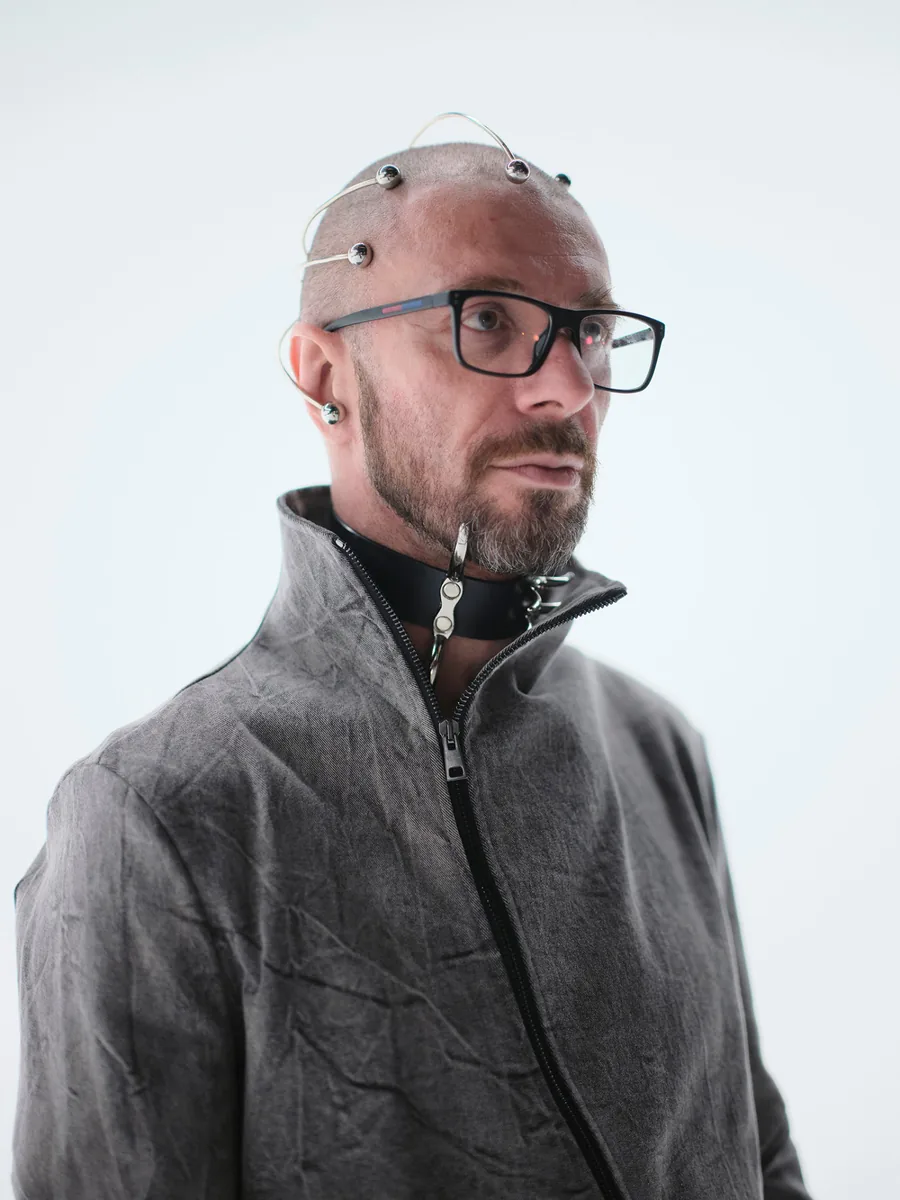
Stanislav Glazov
Media artist, technical director, founder of Hou2Touch
Stanislav started in computer graphics in 1998 with commercials and music videos, and has been teaching since 2001: Maya at RealTime School in Moscow and at SAE Institute in Munich, Houdini at Scream School, CG Event and the British Higher School of Art and Design (2008–2012). In 2009 he launched his own Houdini school, houdini-howto.com, and in 2014 he began teaching TouchDesigner. He was a character and VFX technical director on animated features at Caligari Film, Trixter and Scanline, working on rigging, cloth and hair pipelines, simulation and Maya API development. In 2010 he built the Houdini infographics pipeline for Kommersant TV, then moved into real-time visuals: video mapping at SILA SVETA and Visuals.108 (2011–2013) and, from 2013 to 2019, his own studio Licht.Pfad. He made the first Hou2Touch course in 2020 and built the school as a team in 2022. More than 2,000 people have studied with him.
Shown at: Berlin Atonal · Ars Electronica · Mutek Montreal · Barbican · Berghain · Fête des Lumières Lyon · Unsound · Sonar Istanbul · L.E.V.
Worked with: Maxim Didenko · Berlin Ballet Company · Dasha Rush · Robert Lippok · Whitevoid
Companies and clients: Scanline · Trixter · SILA SVETA · Hyundai
Taught at: SAE Institute · Scream School · British Higher School of Art and Design · LPM Rome
Selected projects
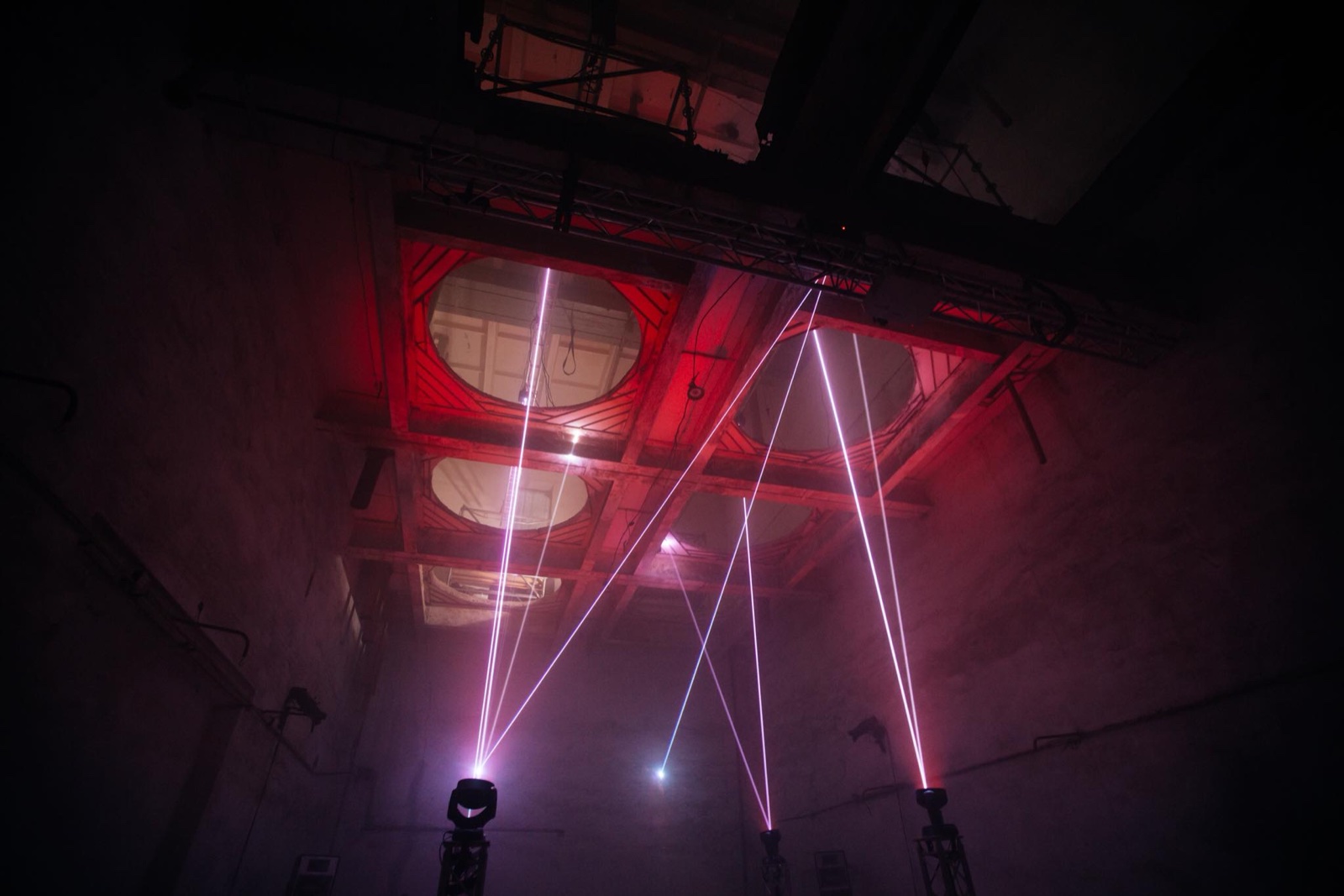
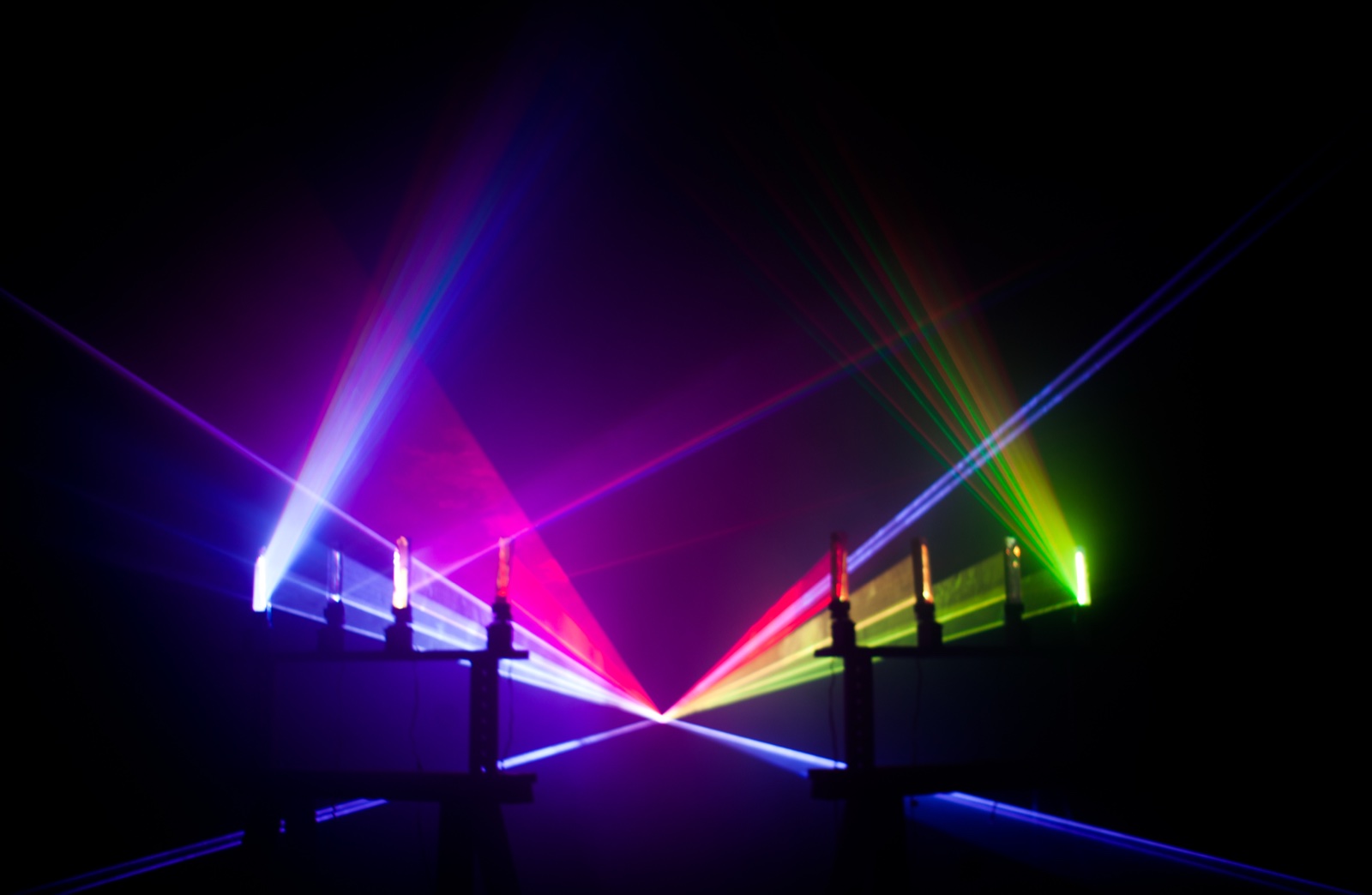
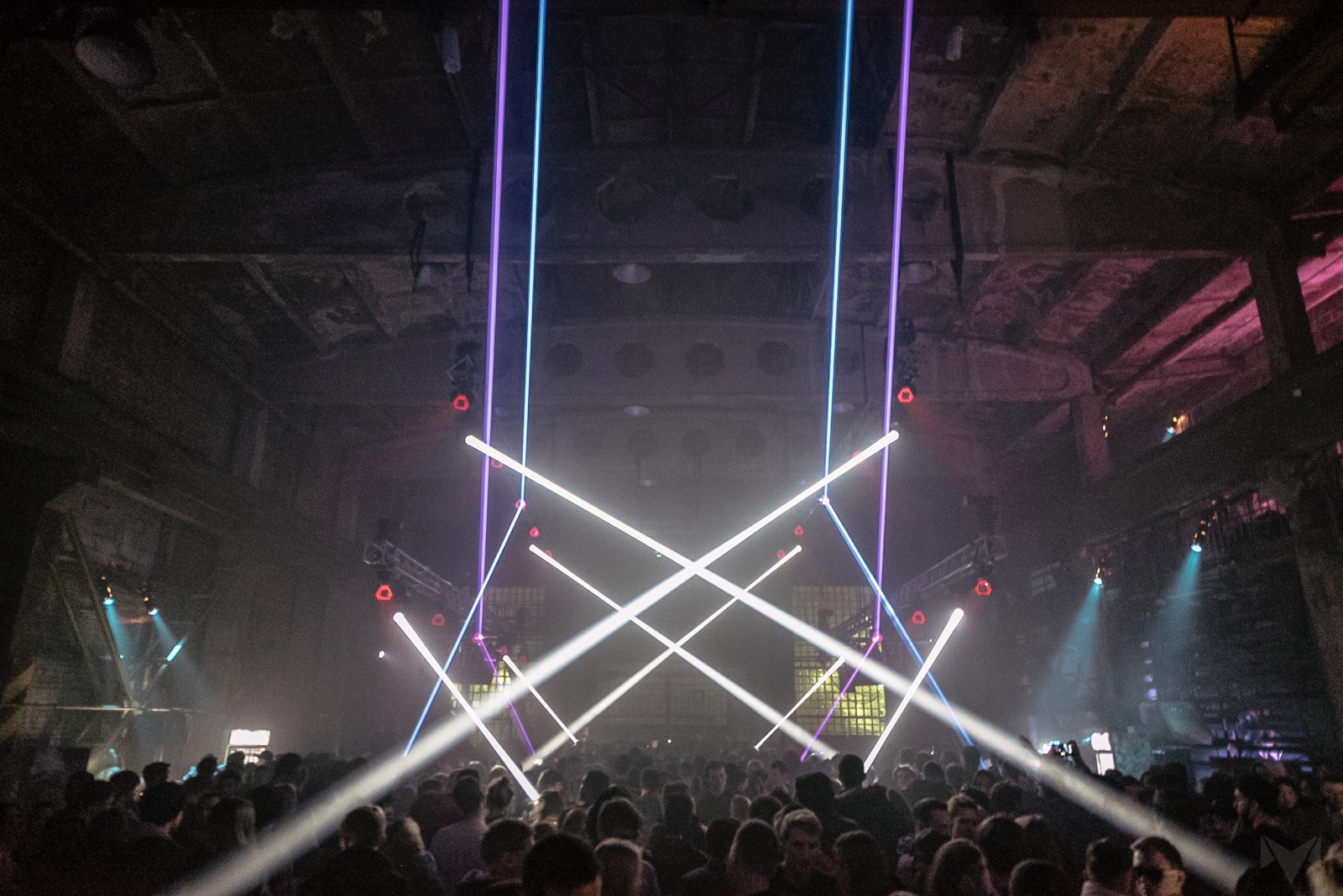
selected festivals & venues
The courses were detailed and provided some excellent examples and techniques that are difficult to find examples of elsewhere. You are definitely a world leading expert in TD.
The courses are great and are the best TD course's I've ever found. The use of a univeristy lesson plan approach coud help the structure of the courses (i.e. defined learning outcomes, overview of example aims, slightly more defined goals etc). I'm happy to help with some of the video production (i.e. RX7) or academic pedagogic approaches (i.e. learning outcome authorship) if needed. I have over 20 years of experience in the music industry and lecturing degree content, having designed 6 undergraduate and two postgraduate degree courses. I'm often in Berlin if you wan to chat!
You have always been very informative and have approached topics in a way that even most novice TD/Shader coders can get value from.
deep in researching and excellent approaches from point of view of proceduralism
all the topics are super, i cover by long my expectatives even push me to learn and achieve new objetives
Deep know how
Pre-production
- Access to all video recordings for 730 days
- The project files used in the lessons
Not taken TouchDesigner 101: Extreme I and TouchDesigner 102: Extreme II yet? Both are in the TouchDesigner Extreme Bundle.
Learning Paths & Courses
Related courses and learning paths.
- preprod204current
 Capture · Depence +1204 Pre-production
Learn to turn a live-event brief into a safe, budgeted lighting design, visualised in Capture and Depence with plots and patch lists.
14 h video · €640
- prod204intermediate
 TouchDesigner · GrandMA2 +2204 Production
Build real-time TouchDesigner and GrandMA2 systems for pixel-mapping, moving heads, lasers and cue playback over Art-Net DMX.
27 h video · €1,230
- lights204dmx & lasers
 Capture · Depence +4204 Real Lights
42 h video · €1,590
- server203intermediate
 TouchDesigner · Ableton Live203 Media Server
Build a TouchDesigner media server for events and theatre: GPU movie library, GLSL grading, cues, timecode and multi-projector output.
11 h video · €485
Think procedural
11All courseshou2touch.com ↑hou2touch 2025 (c)
go up ^ License Agreement go up ^ License Agreement RU Privacy Policy