
Real Lights — Level 2: Production
Lights, lasers and media in one synergetic show
You want a complex light show that uses the strengths of both TouchDesigner and grandMA, with fixtures, pixel mapping and lasers. When each part is programmed on its own, on the night they run side by side rather than as one show. What's missing is a way to design and run it all as one system.
- Structure:
- 11 modules, 33 lessons
- Video:
- 27 h in total
- Pace:
- Weekly · all on request
- Access:
- 2 years
- Language:
- English
- Level:
- Intermediate
About the course
Aboutthecourse
- 01
the starting point
This course develops the ability to design and operate integrated real-time systems for lighting, pixel-mapping, moving heads, and lasers.
- 02
what you build
Working across TouchDesigner and GrandMA over networked DMX, learners map visual and geometric data onto fixtures and lasers, program coordinated cue playback, drive the console from MIDI and sound, and keep a show's output reliable and correctly prioritised.
Courseaims
- 01
To provide an understanding of how DMX and Art-Net carry control data to lighting fixtures and lasers, how geometry and UV maps link a venue model to its LED screens, what a show-laser scanner can draw safely, and how TouchDesigner and a GrandMA2 console share control of one rig.
- 02
To develop practical skills in building TouchDesigner control, pixel-mapping and show-control systems (MIDI and sound) for fixtures, moving heads and LED rigs, preparing scanner-safe laser graphics, and programming cue playback in GrandMA2.
- TouchDesigner DMX / Art-Net ·
- TD Geometry & UV ·
- GrandMA Fundamentals ·
- GrandMA Patching (Fixtures, Pixel, Moving) ·
- GrandMA Sequencing & Playback ·
- GrandMA <-> TD Data Bridge ·
- Procedural TD <-> GrandMA Control ·
- Pixel Mapping ·
- Show Control ·
- Laser Graphics — Pangolin / Sollinger ·
- Moving Heads ·
Who this course is for
For you if
- Lighting designers — You already plan looks for a rig, and this course is about designing the real-time system that drives fixtures, pixel rigs, moving heads and lasers from TouchDesigner and GrandMA together.
- Show designers — Your shows combine light, LED surfaces and lasers, and this course treats them as one networked system, with visual and geometric data reaching every fixture and laser.
- Lighting operators — You run the console during the show, and this course is about running it alongside TouchDesigner, with cue playback, MIDI and sound triggers, and output that stays reliable and correctly prioritised.
Not for you if
- –you do not meet the requirements in “Before you start”
- –you have neither taken TouchDesigner 204: Real Lights — Level 1: Pre-production, TouchDesigner 101: Extreme I and TouchDesigner 102: Extreme II nor gained equivalent experience
Before you start
Level 1: Real Lights Pre-production. Plus completion of TouchDesigner 101: Extreme I and TouchDesigner 102: Extreme II, or an equivalent working knowledge of TouchDesigner network building, CHOP workflows and parameter editing, SOP geometry workflows, Camera COMP and Render TOP workflows, and Python scripting in TouchDesigner.
Prerequisites:TouchDesigner 204: Real Lights — Level 1: Pre-production↗, TouchDesigner 101: Extreme I↗, TouchDesigner 102: Extreme II↗
- 01Build TouchDesigner control of PARs and moving heads over Art-Net/DMX with smooth 16-bit movement, and aim moving heads at real-world positions with XYZ coordinates and stage markers
- 02Map video onto LED screens and curved venue surfaces from a 3D model of the venue, using UV maps built from a venue's pixel map and a chosen viewing position
- 03Build a pixel-mapping engine in TouchDesigner that turns fixture positions and video into RGBW channel data, packs it into DMX universes and delivers it over Art-Net to a visualiser, then finds and fixes order and flip errors
- 04Program GrandMA2 from patch to playback: patching conventional, pixel and moving fixtures, building groups and presets, and recording cue sequences with tracking and shaped transitions
- 05Share control of one rig between TouchDesigner and a GrandMA2 console over Art-Net, merging their signals by priority and driving the console from MIDI and sound with fader, cue and beat triggers
- 06Prepare scanner-safe laser graphics in TouchDesigner and send them to a Capture preview and to a laser over Ethernet
Programme
01TouchDesigner DMX / Art-Net
4 videos · 2 h 23 min
Lesson 1. Sending Art-Net DMX to Capture; Building moving-head controls · 48 min
In this lesson we send Art-Net DMX from TouchDesigner to a lighting visualizer on one computer, through a virtual network adapter. We scale values to the DMX range, see why Art-Net counts channels from zero, and lay out PAR and moving-head channels by address. Then we drive pan, tilt and dimmer.
Lesson 2. Splitting 16-bit DMX into coarse and fine channels · 54 min
In this lesson we see why one 8-bit DMX channel makes a moving head step instead of glide, and how a coarse and a fine channel together remove the steps. We split one smooth control value into that pair, fix range and order mistakes, and pack the result into a reusable tool.
Lesson 3. Routing CHOP exports with path-parameter channel names · 22 min
In this lesson we learn four ways to control a parameter: a fixed value, an expression, an exported signal and a two-way link. We name signals so that one source drives many targets, choose between routing by position, by name or by destination path, and write a short expression that scales a signal.
Lesson 4. Animating with Timeline and Speed CHOP; Dynamically renaming DMX channels · 19 min
In this lesson we choose between expression time and time-based signals for DMX animation, and control its speed, pauses and resets. We then build a self-contained component with its own parameters, input and output, which names its DMX channels from a setting and from its own number, and save it for reuse.
02TD Geometry & UV
5 videos · 3 h 28 min
Lesson 5. Understanding geometry: points, vertices, primitives, and attributes · 24 min
In this lesson we trace TouchDesigner geometry back to Houdini, then learn how points, vertices and primitives fit together. We use this to explain smooth versus flat shading, where normals and UV coordinates are stored, and how vertex order differs from point order.
Lesson 6. Geometry Attributes and Laser Mapping · 46 min
In this lesson we learn to work with geometry attributes: giving every point or primitive its own colour, and converting data between geometry, channels and textures. We use UV coordinates to pixel-map a texture onto points, then send the result to a laser, covering scanner limits, safety and aiming the output with a camera.
Lesson 7. UV mapping LED screens in Blender for packed video output · 97 min
In this lesson we learn how a UV map ties an LED screen's 3D model to the pixel layout a video processor expects. We outline the layout in Blender, check it in a visualizer, pack content to match, and project it from a camera position onto a curved screen. Questions on cylinders and gaps are answered.
Lesson 8. Q&A: Faking Hundreds of Pixels in Capture and Depence · 6 min
In this lesson we answer questions from a live session. The main one is why Capture and Depence struggle with hundreds of real pixel lights, and how to fake them with geometry, textures and emission. Shorter answers cover live-performance hardware, how artists find us, projecting light on buildings, and ambient light in live mode.
Lesson 9. UV mapping geometry with Texture SOP · 33 min
In this lesson we learn how points, vertices and primitives decide where UV coordinates live, and how to generate them with several projection types, including different projections on chosen parts of a model. We prepare UVs for a complex shape in Houdini, then use reprojection to show 3D content correctly on one or several screens.
03GrandMA Fundamentals
3 videos · 2 h 32 min
Lesson 10. Intro to Light Design and DMX Patching in GrandMA · 53 min
In this lesson we introduce lighting design: the main fixture types and how DMX512 universes and channels control them. We then patch about 200 fixtures in GrandMA2 onPC and compare console control with sketching the same control by hand in TouchDesigner.
Lesson 11. Professional Lighting Control in GrandMA · 60 min
In this lesson we learn how GrandMA2 organises a rig, so you can program and recall looks fast. We group fixtures, store position and gobo presets, save them to a playback with output priority, swap a fixture type, and count parameters against DMX channels. We also compare this fixture-based logic with TouchDesigner.
Lesson 12. Patching fixtures and using programmer data; Touring GrandMA2 onPC interface · 38 min
In this lesson we get comfortable with GrandMA2 onPC, the PC version of a lighting console that sends DMX. We tour its buttons, encoders and screens, patch a Robe Pointer with a mode, ID and address, and set dimmer, position and zoom. We also use the programmer, where edits wait before storing, plus Clear and Oops undo.
04GrandMA Patching (Fixtures, Pixel, Moving)
3 videos · 2 h 30 min
Lesson 13. Fixture Patching and Import · 58 min
In this lesson we learn how GrandMA2 keeps fixtures, channels and DMX addresses, so you can patch by hand and change routing during a show. Then we export fixture positions and addresses from Capture, import them into GrandMA2 through the command line, and see which data, such as fixture type, you still assign by hand.
Lesson 14. Pixel Control Patch Preparation · 24 min
In this lesson we make an imported GrandMA patch ready for pixel control: we number fixtures and channels in one pass, replace placeholder fixture types with library modes, and learn how a master instance and pixel instances are selected for effects. We also outline how DMX data will travel from TouchDesigner through GrandMA to Capture.
Lesson 15. Creating and editing GrandMA position and colour presets · 69 min
In this lesson we connect GrandMA2 and Capture over a network, patch four moving fixtures with 16-bit controls, and group master and pixel instances. Then we store position and colour presets, merge and remove their data, and see why a preset reference keeps programming easy to adjust.
05GrandMA Sequencing & Playback
3 videos · 2 h 44 min
Lesson 16. Tour of GrandMA console controls; Programmer, networking and views · 42 min
In this lesson we see why a GrandMA console is built the way it is and how its faders, wheels and buttons let you operate quickly during a show. We prepare fixture changes in the programmer without sending them out, recall views, compare white-LED and RGB colour output, and look at how consoles share one show over a network.
Lesson 17. Storing and playing back lighting cues; Building fixture layouts · 47 min
In this lesson we turn imported fixture and pixel positions into spatial layouts, so you can select lamps and pixels by where they hang in the rig. Then we store looks in sequences, run them from faders, bring moving heads to position before raising the light, and shape a cue-to-cue move with a fade time and a curve.
Lesson 18. Sequencing and Playback Programming in GrandMA · 75 min
In this lesson we program playbacks in GrandMA: we record steps into a sequence as cues, run them from an executor and move between them with Go. We control what each cue keeps with tracking, time changes with fades, soften movement with a curve, and raise position resolution to remove visible stepping.
06GrandMA <-> TD Data Bridge
2 videos · 2 h 0 min
Lesson 19. Fixture Matrix and Bitmap Mapping in GrandMA · 62 min
In this lesson we turn 900 GrandMA fixtures into a matrix that can work as a screen. We arrange the fixtures in the visualiser, shape patterns with built-in effects, project a video through the bitmap engine and see its limits, then export the fixture layout as an XML file for external mapping.
Lesson 20. Art-Net Pixel Mapping Control · 57 min
In this lesson we send TouchDesigner pixel mapping into GrandMA over Art-Net and keep it stable. We receive it without feedback loops, set how the console merges it with its own values, keep the signal from dropping out, and build shared controls. A question on latency is answered, and procedural and console control are compared.
07Procedural TD <-> GrandMA Control
2 videos · 2 h 59 min
Lesson 21. Procedural Lighting Control in TouchDesigner and GrandMA · 88 min
In this lesson we connect TouchDesigner to GrandMA so one patch can drive many moving heads. We turn a manufacturer's DMX chart into a named channel table, generate control data for hundreds of fixtures with a script, then link both programs over Art-Net and a free visualiser. We finish by resolving who wins when both send values.
Lesson 22. Pixel Mapping in TouchDesigner · 91 min
In this lesson we turn a grandMA fixture export into a pixel-mapped TouchDesigner rig: we compare ways to split work between the two programs, read fixture positions from the exported XML, and use them to light 900 moving heads from a moving image. We split their data across DMX universes and answer a question about routing tables.
08Pixel Mapping
5 videos · 2 h 48 min
Lesson 23. Updating GrandMA fixture profiles for MA3D visualization · 46 min
In this lesson we prepare the 40-fixture chorus line to run on one machine. We export the fixtures from Capture, move GrandMA onto a loopback network, and load a more accurate fixture library and layer. Then we join MA3D to the session and fix its fixture rotations.
Lesson 24. Building oriented LED fixture lines from CSV data · 27 min
In this lesson we turn a CSV of 40 fixture centres into oriented LED fixtures in TouchDesigner. We clean the table, create points, give each side of the rig its own direction and up vector, and replace every point with a centred 16-point line. How operators select data is also explained.
Lesson 25. Building tube-fixture DMX templates; Scripting fixture arrays · 36 min
In this lesson we turn fixture geometry into DMX pixel-mapping data. We generate UV coordinates, sample a texture, and lay out the channels of an RGBW fixture. Then we repeat that layout for 40 fixtures in two ways, from a table and with a short Python script, and match the sampled colours to their channels.
Lesson 26. Preparing padded DMX universes from fixture data · 19 min
In this lesson we learn how to fit fixture data into DMX universes without splitting a fixture. We work out how many whole fixtures fit in 512 channels, cut the long channel list into universe-sized groups and pad each with zeros. We also scale values from 0-1 to 0-255 and compare two data layouts by speed.
Lesson 27. Correcting pixel-map fixture and pixel order · 40 min
In this lesson we send the finished pixel map to a visualizer over Art-Net and make it right. We route seven universes, test dimmer and tilt, then use test patterns to find reversed fixture order, single flipped fixtures and a stretched video. We also explain why broadcast is only for testing.
09Show Control
2 videos · 2 h 3 min
Lesson 28. Building a DMX fixture template; Creating a dimmer chase · 44 min
In this lesson we make DMX fixture control procedural: a reusable channel template with default values, fixture numbers kept apart from DMX addresses, and spare channels for patch gaps. Channels are then driven by name from manual values and an animated dimmer chase, and the patch is grouped into labelled blocks.
Lesson 29. Lighting Control Integration in TouchDesigner · 79 min
In this lesson we control a grandMA console from TouchDesigner and Ableton Live. MIDI notes and fader envelopes become Art-Net channels that fire cues and move faders, with a receiving block that survives changing inputs. Kicks analysed from Ableton audio drive clock-divided triggers that change looks and presets.
10Laser Graphics — Pangolin / Sollinger
3 videos · 2 h 46 min
Lesson 30. Preparing geometry for laser scanning; Building Raster SOP grids · 96 min
In this lesson we send laser data from TouchDesigner into Capture to preview two lasers, and learn why a scanner draws ordered points, not pixels. We then build laser shapes from geometry, compare point orders on a grid, and colour the result.
Lesson 31. Prototype full-dome laser projection with Ray SOP · 15 min
In this lesson we sketch how to project laser paths onto a full dome. We place the laser and its aim point in space, turn a grid surface towards the laser, and find where rays from the source points hit it. A closing discussion compares GPU and CPU for detailed paths.
Lesson 32. Laser Graphics in TouchDesigner · 55 min
In this lesson we learn how a show laser turns points into a drawing and why careless data can burn its scanner. We connect a laser over Ethernet, set sample rate, step size and blanking, then colour the graphics by noise and textures, mask the output, and animate the beam from signals.
11Moving Heads
1 video · 1 h 9 min
Lesson 33. Coordinate-Based Moving Head Control in TouchDesigner and GrandMA · 69 min
In this lesson we point moving heads at real-world positions: in grandMA with XYZ coordinates and stage markers, and from TouchDesigner, where pan and tilt are computed from vectors. We then route DMX data between the console and TouchDesigner over Art-Net, record it as an image for backup and playback, and merge two sources by last change.
After this course
Bundles and learning paths with this course
How the course works
The course is recorded and you take it at your own pace.
Lessons open once a week on your own schedule, counted from the day you get access: it keeps a steady rhythm and does not overload you. If you want the whole course at once, write to us and we open full access.
27 h in total
11 modules, 33 lessons
Weekly · all on request
Price and what's included
Production
- Access to all video recordings for 730 days
- The project files used in the lessons
What you get
- Access to all video recordings for 730 days
- The project files used in the lessons
Payment
The price is final and the same for everyone. It includes German VAT (19%). Buyers outside the EU and EU businesses with a valid VAT ID pay the same price; their invoice shows no VAT (reverse charge).
You can pay by card (Stripe), PayPal or bank transfer.
FAQ
01Can I pay in instalments?
Yes, in two parts: €1,230 now and the rest within 45 days.
02How long will I have access to the lessons?
730 days. If you need more time, write to us and we extend it.
03Why pay for the course if there are free tutorials on YouTube?
YouTube tutorials are made to teach one specific technique, usually without a system or a methodology. We teach you to understand systematically how the logic of node architecture works, with a balance between a practical and an academic approach.
04I work on a Mac. Will the course work for me?
Partly: TouchDesigner and Capture run on a Mac; grandMA2 onPC needs Windows. More on requirements — see "What computer and software do I need?".
05What computer and software do I need?
Windows is more efficient for this work; a Mac works too, but with limits from 3D drivers and some Nvidia-only TouchDesigner operators. TouchDesigner 2023 or later: Windows 10/11 or macOS 13+ (Apple Silicon recommended); a GPU with Vulkan 1.1 and at least 4 GB of video memory, 8 GB or more recommended. GrandMA2: grandMA2 onPC runs on Windows only. Laser Graphics: Laser output needs a laser controller (DAC) between the computer and the laser. Pangolin Beyond runs on Windows only (Windows 10, 64-bit or newer); the LaserAnimation Sollinger route over AVB also works on a Mac. Capture: Windows 11 (64-bit) with DirectX 11.1, or macOS 13.5 or later with Metal; a free Student edition exists.
06Is the free version of the software enough?
Yes, the free versions are enough: TouchDesigner Non-Commercial, grandMA2 onPC (free; DMX output needs MA hardware) and the Capture Student Edition (a smaller fixture library, everything else the same).
07Is there code in the course?
Almost none: a Script CHOP and a little Python are shown in passing in the TouchDesigner–GrandMA lessons, as an optional shortcut.
08Do you issue a certificate?
We don't issue certificates. What you take away is experience and the project files, and if you do all the assignments, a portfolio of your own works.
09Can I get an invoice for my employer or company?
Yes, we issue invoices to companies. Write to us before you pay.
10Are there subtitles?
Yes, every lesson has subtitles.
11How much time will the course take?
About 68–81 hours including practice: the course has 27 h of video, and each hour of video takes 2.5–3 hours to watch, rewatch and do the assignments.
12Are project files included?
Yes, every course comes with its project files.
Didn't find your answer, or not sure the course fits you?
Telegram: https://t.me/prcdrl or write to support in your GetCourse account.
Pavel Zmunchila
Ex Co-Founder of S E T U P
Pavel Zmunchila is a lighting and visual artist, as well as a set designer with over 12 years of experience in a vast field from modern theater and technological art to electronic dance music and stadium rock tours.
Started in 2012 as a technical director and lighting designer of a modern theater and music venue, developed further to a lighting designer of one of the largest musical theater projects in Russia.
Continued developing skills and expanding toolset, moved forward to creating custom control systems for lighting, lasers and real-time generative video content for music events.
In 2018, together with Stepan Novikov, Dmitry Znamenskiy and Anton Kochnev, founded Setup Design studio which successfully collaborates with various musical, art and festival projects as well as creates their own technological art experiences.
Andrey [wzrt] Biryuk
Lighting designer and show programmer, Technical Director at Wiz.art
Andrey Biryuk has worked in multimedia and live entertainment for more than 15 years and is Technical Director at Wiz.art in Almaty. He designs and programs light and video for festivals, concert tours and installations: since 2021 he has been lighting designer and video engineer of the SPEKTO electronic music festival, where he integrates TouchDesigner and Arena media servers into the show control; in 2024 he designed and programmed the light and video of the circus show Legends of the Silk Way in Shanghai; in 2025 he was lighting system engineer for the Jennifer Lopez and Backstreet Boys concerts in Almaty. He works with grandMA3 and ChamSys consoles, LightAct, Arena and Watchout media servers, and plans every show in Depence, the tool he teaches in this course.
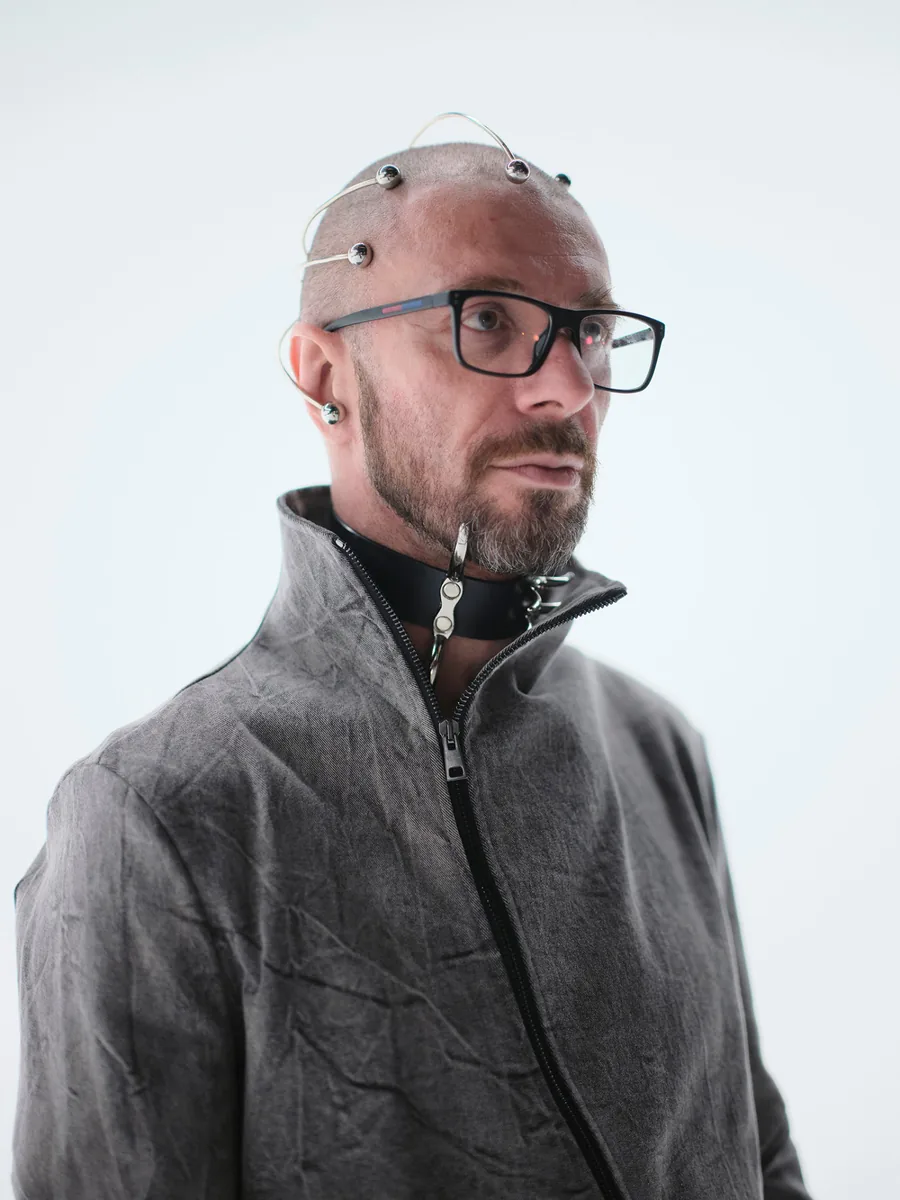
Stanislav Glazov
Media artist, technical director, founder of Hou2Touch
Stanislav started in computer graphics in 1998 with commercials and music videos, and has been teaching since 2001: Maya at RealTime School in Moscow and at SAE Institute in Munich, Houdini at Scream School, CG Event and the British Higher School of Art and Design (2008–2012). In 2009 he launched his own Houdini school, houdini-howto.com, and in 2014 he began teaching TouchDesigner. He was a character and VFX technical director on animated features at Caligari Film, Trixter and Scanline, working on rigging, cloth and hair pipelines, simulation and Maya API development. In 2010 he built the Houdini infographics pipeline for Kommersant TV, then moved into real-time visuals: video mapping at SILA SVETA and Visuals.108 (2011–2013) and, from 2013 to 2019, his own studio Licht.Pfad. He made the first Hou2Touch course in 2020 and built the school as a team in 2022. More than 2,000 people have studied with him.
Shown at: Berlin Atonal · Ars Electronica · Mutek Montreal · Barbican · Berghain · Fête des Lumières Lyon · Unsound · Sonar Istanbul · L.E.V.
Worked with: Maxim Didenko · Berlin Ballet Company · Dasha Rush · Robert Lippok · Whitevoid
Companies and clients: Scanline · Trixter · SILA SVETA · Hyundai
Taught at: SAE Institute · Scream School · British Higher School of Art and Design · LPM Rome
Selected projects
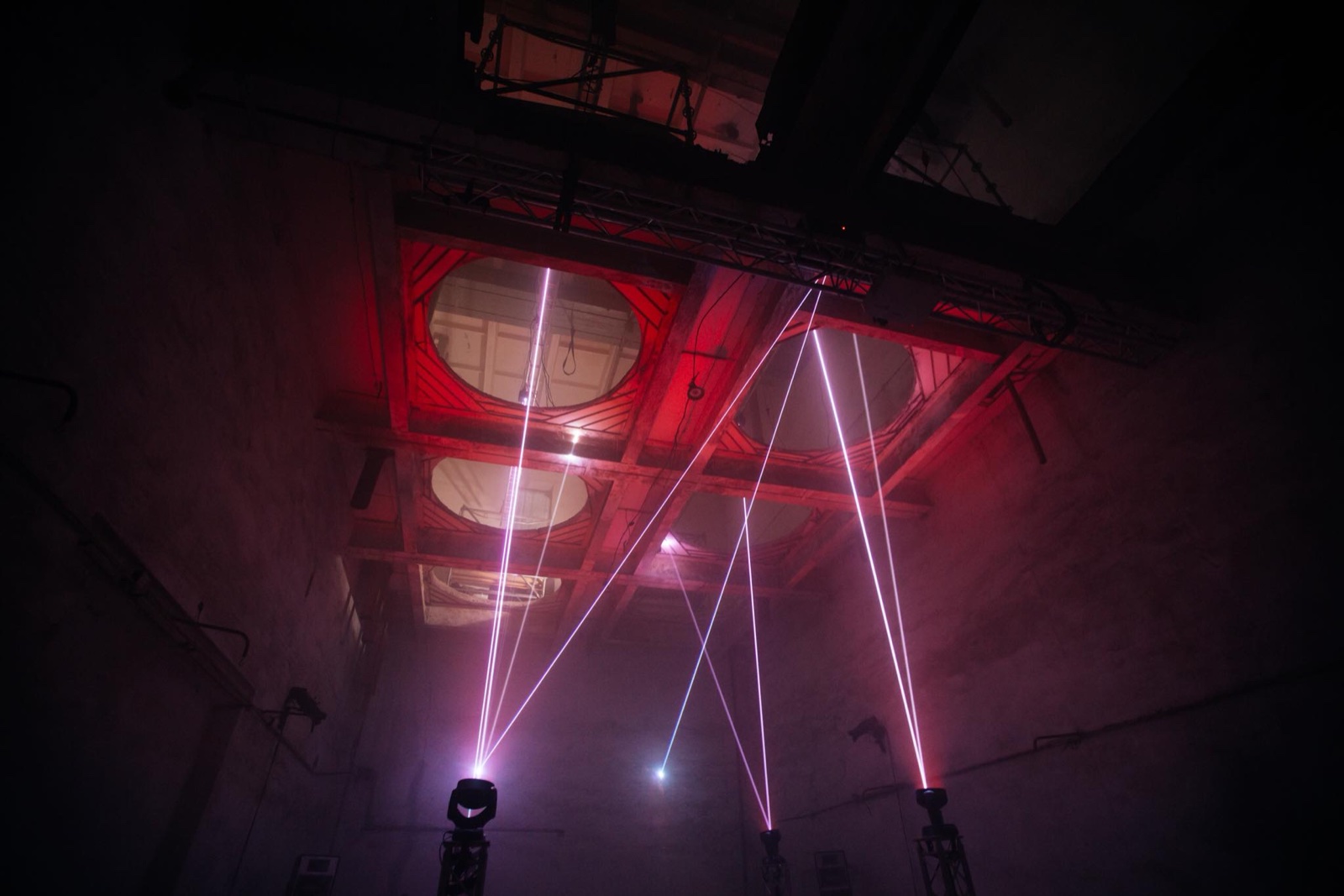
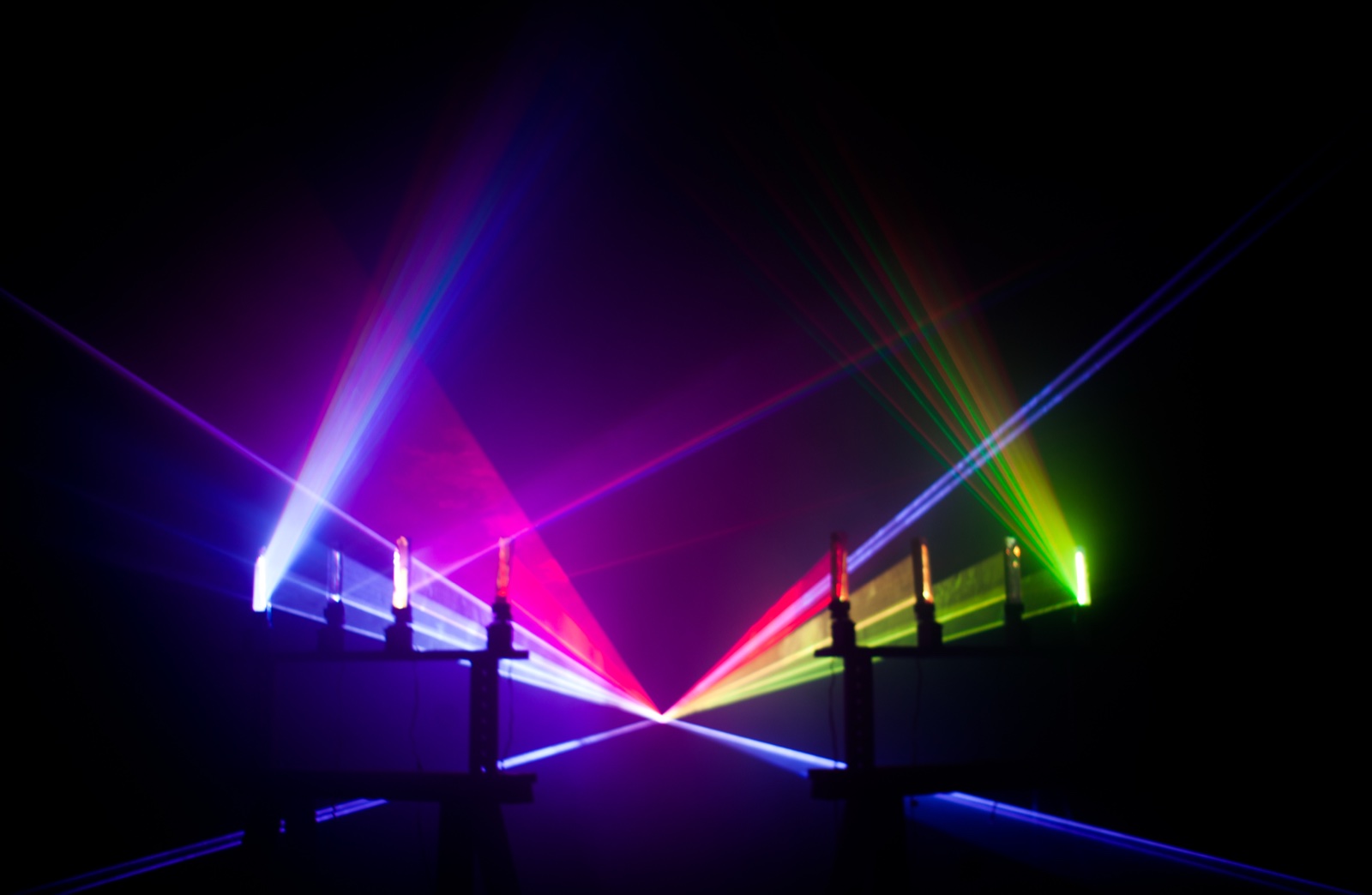
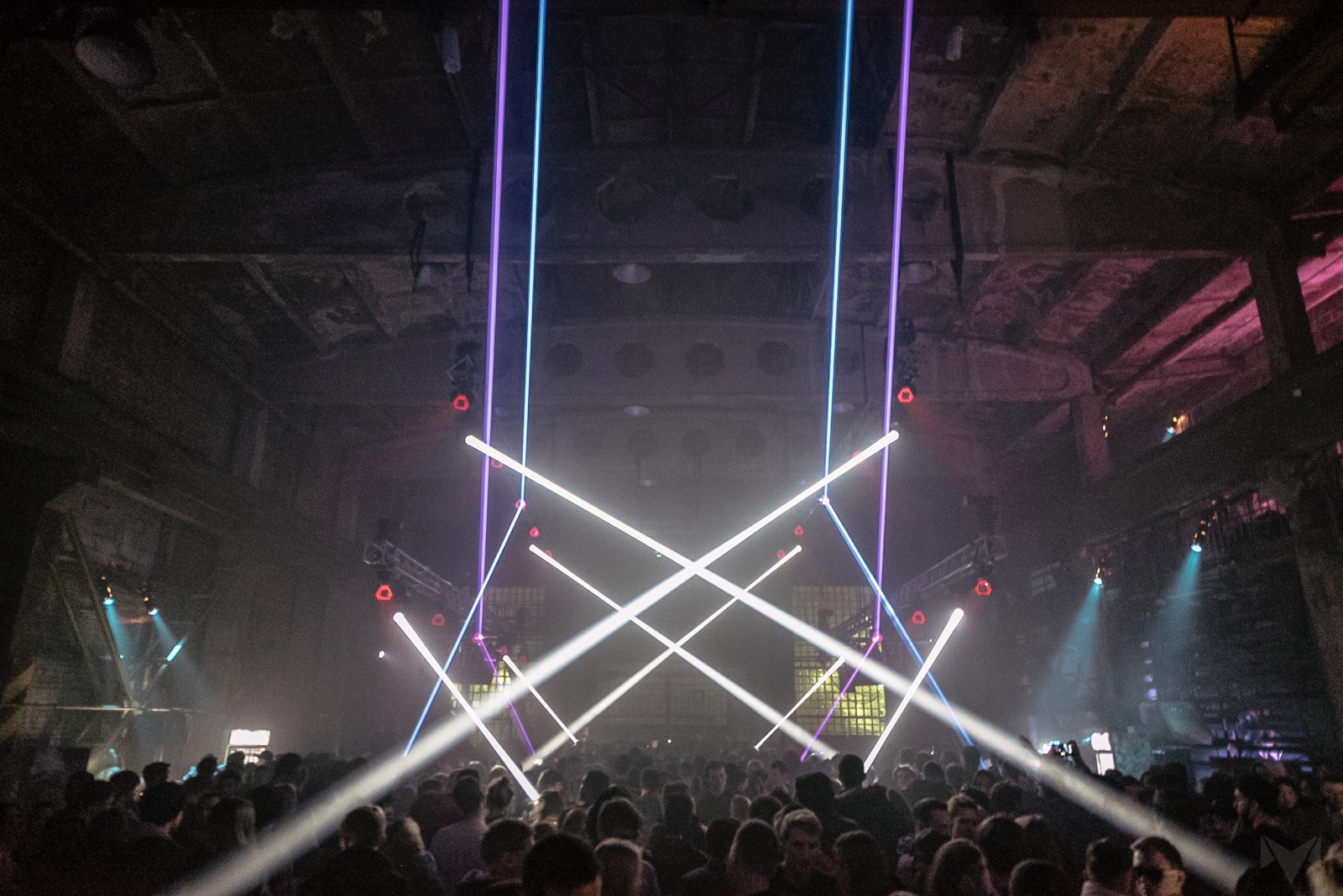
selected festivals & venues
The courses were detailed and provided some excellent examples and techniques that are difficult to find examples of elsewhere. You are definitely a world leading expert in TD.
The courses are great and are the best TD course's I've ever found. The use of a univeristy lesson plan approach coud help the structure of the courses (i.e. defined learning outcomes, overview of example aims, slightly more defined goals etc). I'm happy to help with some of the video production (i.e. RX7) or academic pedagogic approaches (i.e. learning outcome authorship) if needed. I have over 20 years of experience in the music industry and lecturing degree content, having designed 6 undergraduate and two postgraduate degree courses. I'm often in Berlin if you wan to chat!
You have always been very informative and have approached topics in a way that even most novice TD/Shader coders can get value from.
deep in researching and excellent approaches from point of view of proceduralism
all the topics are super, i cover by long my expectatives even push me to learn and achieve new objetives
Deep know how
Production
- Access to all video recordings for 730 days
- The project files used in the lessons
Learning Paths & Courses
Related courses and learning paths.
- preprod204intermediate
 Capture · Depence +1204 Pre-production
Learn to turn a live-event brief into a safe, budgeted lighting design, visualised in Capture and Depence with plots and patch lists.
14 h video · €640
- prod204current
 TouchDesigner · GrandMA2 +2204 Production
Build real-time TouchDesigner and GrandMA2 systems for pixel-mapping, moving heads, lasers and cue playback over Art-Net DMX.
27 h video · €1,230
- lights204dmx & lasers
 Capture · Depence +4204 Real Lights
42 h video · €1,590
- server203intermediate
 TouchDesigner · Ableton Live203 Media Server
Build a TouchDesigner media server for events and theatre: GPU movie library, GLSL grading, cues, timecode and multi-projector output.
11 h video · €485
Think procedural
11All courseshou2touch.com ↑hou2touch 2025 (c)
go up ^ License Agreement go up ^ License Agreement RU Privacy Policy