
SOP on GPU - Geometry Shaders
My geometry gets too heavy for real time
On the CPU, complex geometry quickly drops the frame rate, so you simplify the idea. The GPU can build it at almost no cost, but geometry shaders look like a different world.
- Structure:
- 4 modules, 5 lessons
- Video:
- 6.1 h in total
- Pace:
- All lessons open
- Access:
- 2 years
- Language:
- English
- Level:
- Advanced
About the course
Aboutthecourse
- 01
the starting point
This course shows how much complex geometry you can create at the geometry shader stage at almost no cost. Writing a geometry shader is mostly describing point coordinates, so I built a modular framework for it: you write a set of geometry functions and then assemble geometry at render time from the input geometry with a few calls.
- 02
what you build
Along the way you recreate familiar SOP operators on the GPU: transform and copy, select and delete primitives, compute face centres and normals, deform surfaces with a smooth falloff while keeping the shading correct, extrude by distance, build walls with correct triangle winding and build tubes around line segments. You finish with real-time systems: networked structures from point and connectivity data, instance variations that give every instance its own shape (used here for a dynamic 3D text engine), demos of cleaning a Kinect point cloud and of faking geometry trails over time, and you learn which work belongs on the CPU and which on the GPU.
Courseaims
- 01
To provide an understanding of how geometry is stored and processed on the GPU and what the geometry shader stage adds to the vertex and fragment stages.
- 02
To develop practical skills in writing a reusable GLSL function library and using it to recreate SOP operations on the GPU, from deleting, transforming and deforming primitives to extruded walls and tubes, and in building real-time systems with connection lines, per-instance geometry and 3D text.
- GLSL Geometry Foundations ·
- A Modular GLSL Geometry Framework ·
- Procedural Geometry Generation ·
- Advanced Real-Time GPU Systems ·
Who this course is for
For you if
- Media engineers — Your frame budget is tight: here you decide when a task needs the geometry stage and move extrusion, walls and tubes there, where they cost almost nothing.
- Interactive system developers — Your scene must respond to input every frame: here you connect nearby points with lines and clean a Kinect cloud on the GPU, and learn what stays on the CPU.
- 3D and VFX artists — You think in SOP networks: here you rebuild familiar operators, delete, transform and deform primitives, as a function library in GLSL.
- Installation artists — Your pieces run live and keep changing: here you give every instance its own shape and drive a dynamic 3D text engine from data.
- Creative Coders — You already write shaders: here you collect vertex and triangle routines, then assemble whole geometry from a few calls.
Not for you if
- –you do not meet the requirements in “Before you start”
- –you have neither taken TouchDesigner 101: Extreme I and TouchDesigner 102: Extreme II nor gained equivalent experience
Before you start
Completion of TouchDesigner 101: Extreme I and TouchDesigner 102: Extreme II, or an equivalent working knowledge of 3D coordinate systems, the TouchDesigner SOP context, GLSL syntax, Phong shading, and the TouchDesigner SOP/MAT rendering pipeline.
Prerequisites:TouchDesigner 101: Extreme I↗, TouchDesigner 102: Extreme II↗
Not taken them yet? Both are in theTouchDesigner Extreme Bundle↗.
- 01Explain how points, primitives and attributes pass through the vertex, geometry and fragment stages, and decide when a task needs the geometry stage.
- 02Write a reusable library of GLSL vertex and triangle functions and use it to assemble geometry in a geometry shader.
- 03Recreate SOP operations in a geometry shader: delete, transform and deform primitives, extrude with side walls, build tubes around line segments and connect nearby points with lines.
- 04Build per-instance geometry and data-driven 3D text in a geometry shader, and state what GPU deformation of fixed-topology geometry cannot do.
Programme
01GLSL Geometry Foundations
1 video · 52 min
Lesson 1. GLSL geometry shader interfaces and triangle emission · 52 min
In this lesson we learn how geometry is stored as points, vertices, primitives and attributes, and how that data travels through GPU rendering. We read a generated shader, pass in a custom attribute, and add triangles by emitting vertices by hand within the hardware output limit.
02A Modular GLSL Geometry Framework
2 videos · 2 h 6 min
Lesson 2. Building reusable GLSL geometry shader utilities · 53 min
In this lesson we make a geometry shader modular and reusable. We look at what a fragment shader outputs and how lighting moves to world space, then wrap vertices and triangles in custom structures and functions, share them between shaders, and use primitive numbers to delete every fifth primitive. We also see that active viewers slow such shaders.
Lesson 3. Rotating and scaling primitives; Emulating Magnet SOP with normal blending · 74 min
In this lesson we manipulate geometry on the GPU in three ways. We delete triangles near a target, rotate and scale every triangle around its own centre with values that vary by primitive number, and deform a surface with a smooth falloff, like a magnet. We then blend normals so the deformed surface shades correctly.
03Procedural Geometry Generation
1 video · 1 h 27 min
Lesson 4. Extrusion, Walls, Tubes and Networks on the GPU · 87 min
In this lesson we learn to build new geometry on the GPU: triangles extruded only where a magnet-like field acts, with inset, rotation and side walls, and then round tubes around line segments. Along the way we set face orientation for smooth shading and control tube width along the line.
04Advanced Real-Time GPU Systems
1 video · 1 h 44 min
Lesson 5. Instance Variations, Dynamic 3D Text and Kinect Cleanup · 104 min
In this lesson we build a web of semi-transparent lines between nearby points and turn the points into camera-facing hexagons. We then make each instance show its own shape and build 3D text from typed characters. Finally we clean up a Kinect point cloud and look at fake trails and fast GPU deformation.
After this course
Bundles and learning paths with this course
How the course works
The course is recorded and you take it at your own pace.
Every lesson is open from the first day. We recommend taking one lesson a week: it keeps a steady rhythm.
6.1 h in total
4 modules, 5 lessons
All lessons open
Price and what's included
302 SOP on GPU
- Access to all video recordings for 730 days
- The project files used in the lessons
What you get
- Access to all video recordings for 730 days
- The project files used in the lessons
Payment
The price is final and the same for everyone. It includes German VAT (19%). Buyers outside the EU and EU businesses with a valid VAT ID pay the same price; their invoice shows no VAT (reverse charge).
You can pay by card (Stripe), PayPal or bank transfer.
FAQ
01How long will I have access to the lessons?
730 days. If you need more time, write to us and we extend it.
02Why pay for the course if there are free tutorials on YouTube?
YouTube tutorials are made to teach one specific technique, usually without a system or a methodology. We teach you to understand systematically how the logic of node architecture works, with a balance between a practical and an academic approach.
03I work on a Mac. Will the course work for me?
Yes. Sections with Kinect or other depth cameras need Windows. More on requirements — see "What computer and software do I need?".
04What computer and software do I need?
Windows is more efficient for this work; a Mac works too, but with limits from 3D drivers and some Nvidia-only TouchDesigner operators. TouchDesigner 2023 or later: Windows 10/11 or macOS 13+ (Apple Silicon recommended); a GPU with Vulkan 1.1 and at least 4 GB of video memory, 8 GB or more recommended.
05Is the free version of the software enough?
TouchDesigner Non-Commercial is enough for the whole course, with the limits of the free licence.
06Is there code in the course?
Yes: this course is about GLSL geometry shaders — you write them and build a reusable library of geometry functions.
07Do you issue a certificate?
We don't issue certificates. What you take away is experience and the project files, and if you do all the assignments, a portfolio of your own works.
08Can I get an invoice for my employer or company?
Yes, we issue invoices to companies. Write to us before you pay.
09Are there subtitles?
Yes, every lesson has subtitles.
10How much time will the course take?
About 15–18 hours including practice: the course has 6.1 h of video, and each hour of video takes 2.5–3 hours to watch, rewatch and do the assignments.
11Are project files included?
Yes, every course comes with its project files.
Didn't find your answer, or not sure the course fits you?
Telegram: https://t.me/prcdrl or write to support in your GetCourse account.
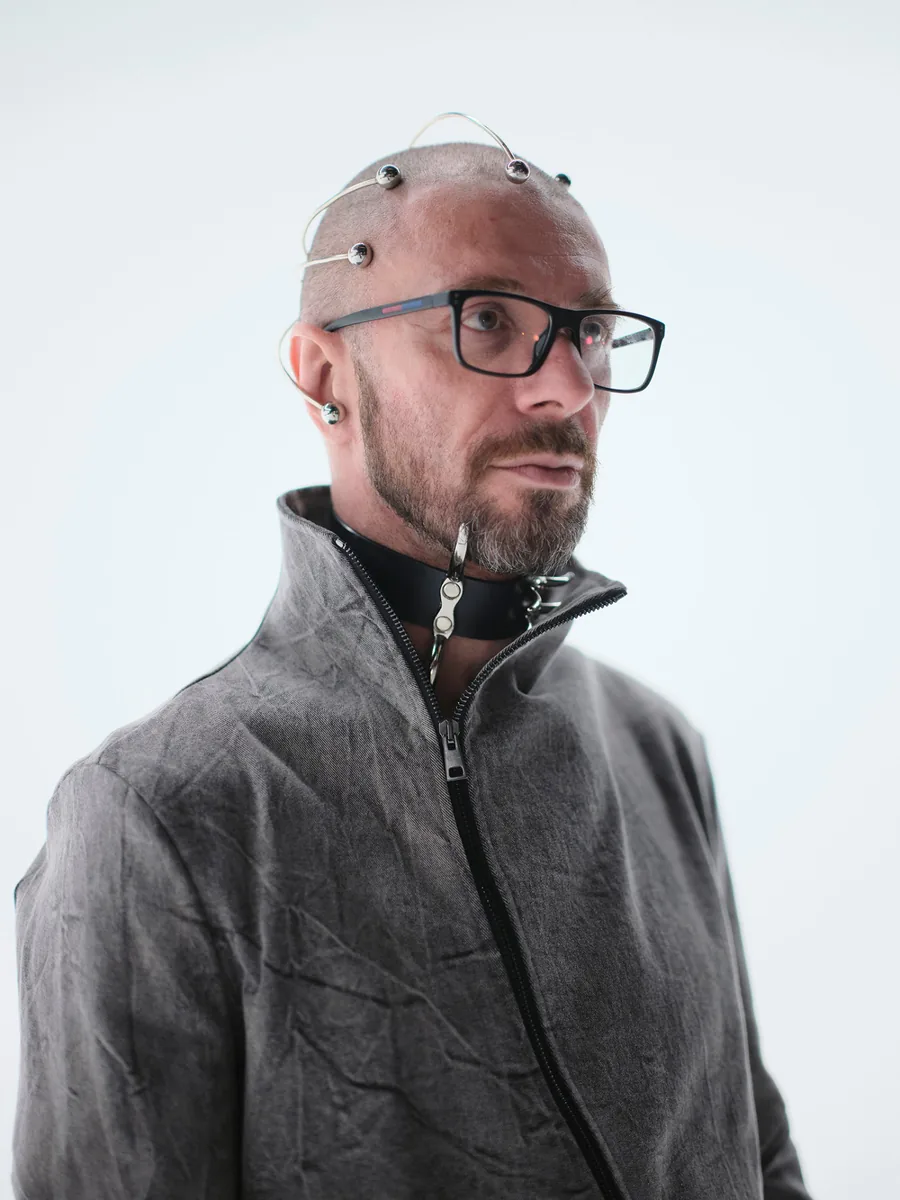
Stanislav Glazov
Media artist, technical director, founder of Hou2Touch
Stanislav started in computer graphics in 1998 with commercials and music videos, and has been teaching since 2001: Maya at RealTime School in Moscow and at SAE Institute in Munich, Houdini at Scream School, CG Event and the British Higher School of Art and Design (2008–2012). In 2009 he launched his own Houdini school, houdini-howto.com, and in 2014 he began teaching TouchDesigner. He was a character and VFX technical director on animated features at Caligari Film, Trixter and Scanline, working on rigging, cloth and hair pipelines, simulation and Maya API development. In 2010 he built the Houdini infographics pipeline for Kommersant TV, then moved into real-time visuals: video mapping at SILA SVETA and Visuals.108 (2011–2013) and, from 2013 to 2019, his own studio Licht.Pfad. He made the first Hou2Touch course in 2020 and built the school as a team in 2022. More than 2,000 people have studied with him.
He has taught 2D GLSL procedural graphics since 2019 (LPM Rome) and wrote the Hou2Touch GLSL and SOP-on-GPU courses.
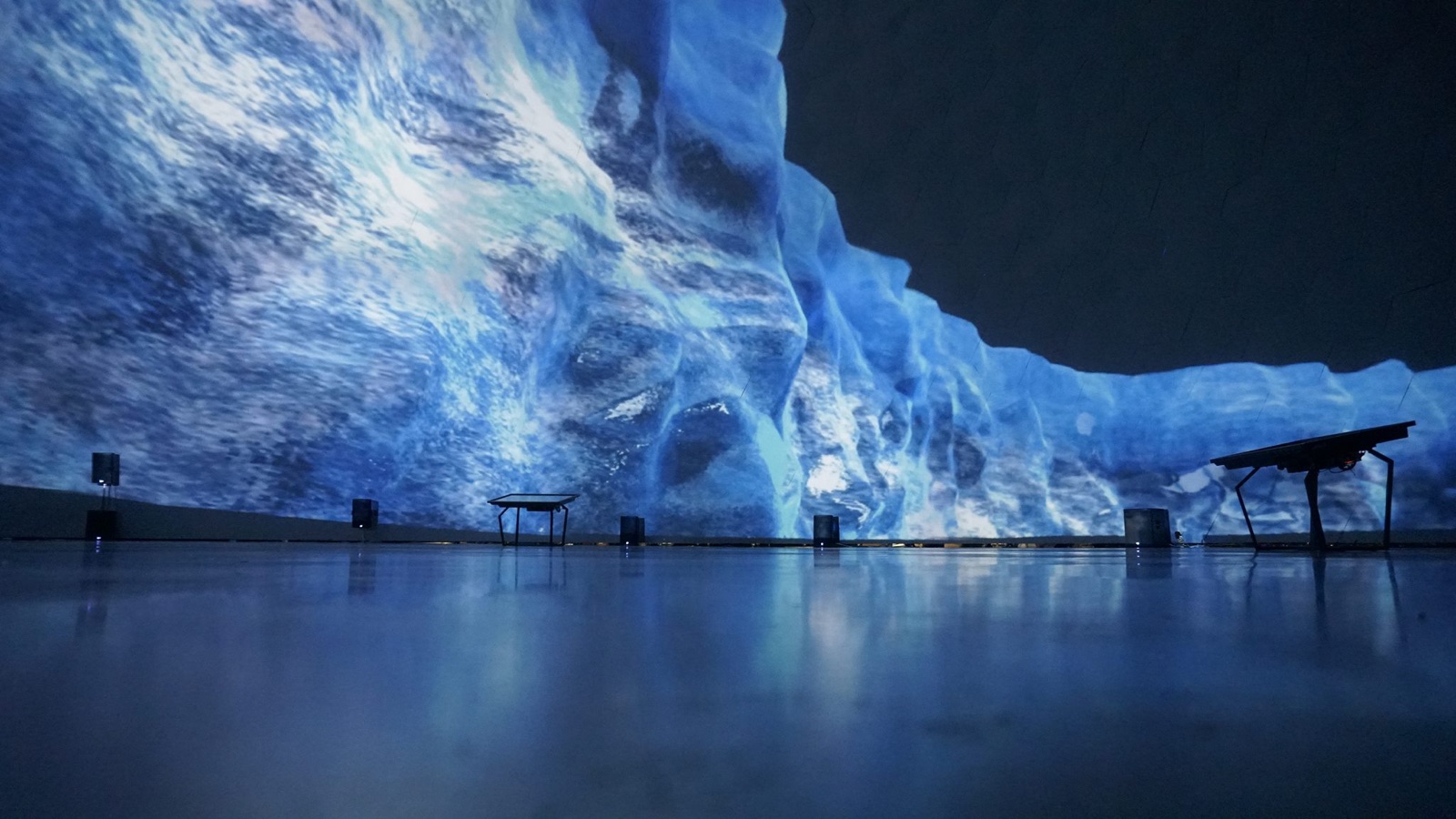
Houdini runs through his work: the terrain of Defrag (2019), the Kinect→TouchDesigner→Houdini pipeline of the Drop it music video (2020), the Iceberg installation (2020). He presented this practice at Derivative: the talk «Houdini and TouchDesigner in artistic work» and the workshop «Procedural pipeline for CG Artist» (2021).
Shown at: Berlin Atonal · Ars Electronica · Mutek Montreal · Barbican · Berghain · Fête des Lumières Lyon · Unsound · Sonar Istanbul · L.E.V.
Worked with: Maxim Didenko · Berlin Ballet Company · Dasha Rush · Robert Lippok · Whitevoid
Companies and clients: Scanline · Trixter · SILA SVETA · Hyundai
Taught at: SAE Institute · Scream School · British Higher School of Art and Design · LPM Rome
Selected projects
selected festivals & venues
The courses were detailed and provided some excellent examples and techniques that are difficult to find examples of elsewhere. You are definitely a world leading expert in TD.
The courses are great and are the best TD course's I've ever found. The use of a univeristy lesson plan approach coud help the structure of the courses (i.e. defined learning outcomes, overview of example aims, slightly more defined goals etc). I'm happy to help with some of the video production (i.e. RX7) or academic pedagogic approaches (i.e. learning outcome authorship) if needed. I have over 20 years of experience in the music industry and lecturing degree content, having designed 6 undergraduate and two postgraduate degree courses. I'm often in Berlin if you wan to chat!
You have always been very informative and have approached topics in a way that even most novice TD/Shader coders can get value from.
deep in researching and excellent approaches from point of view of proceduralism
all the topics are super, i cover by long my expectatives even push me to learn and achieve new objetives
Deep know how
302 SOP on GPU
- Access to all video recordings for 730 days
- The project files used in the lessons
Not taken TouchDesigner 101: Extreme I and TouchDesigner 102: Extreme II yet? Both are in the TouchDesigner Extreme Bundle.
Learning Paths & Courses
Related courses and learning paths.
- glsl301advanced
 TouchDesigner301 2D GLSL
Write GLSL fragment shaders in TouchDesigner for procedural patterns, colour correction, stylised effects, feedback and Shadertoy ports.
6.9 h video · €380
- sopgpu302current
 TouchDesigner302 SOP on GPU
Build complex geometry on the GPU with geometry shaders: a reusable GLSL framework recreating SOPs, extrusions, tubes and 3D text.
6.1 h video · €340
- script304advanced
 TouchDesigner304 Script SOP
Write your own TouchDesigner geometry tools in Python with the Script SOP: extrudes, scatter, Delaunay meshes and OpenCV contours.
5.7 h video · €315
- cpp305advanced
 TouchDesigner · Visual Studio305 C++ API
Extend TouchDesigner with C++: build custom CHOP, TOP and SOP plugins in Visual Studio, adding hardware SDKs, openFrameworks and OpenCV.
6.5 h video · €355
Think procedural
11All courseshou2touch.com ↑hou2touch 2025 (c)
go up ^ License Agreement go up ^ License Agreement RU Privacy Policy